Why Leadership Communication Matters for Internal Communication
07.10.2026 von Sebastian Riedel


Why Leadership Communication Matters for Internal Communication
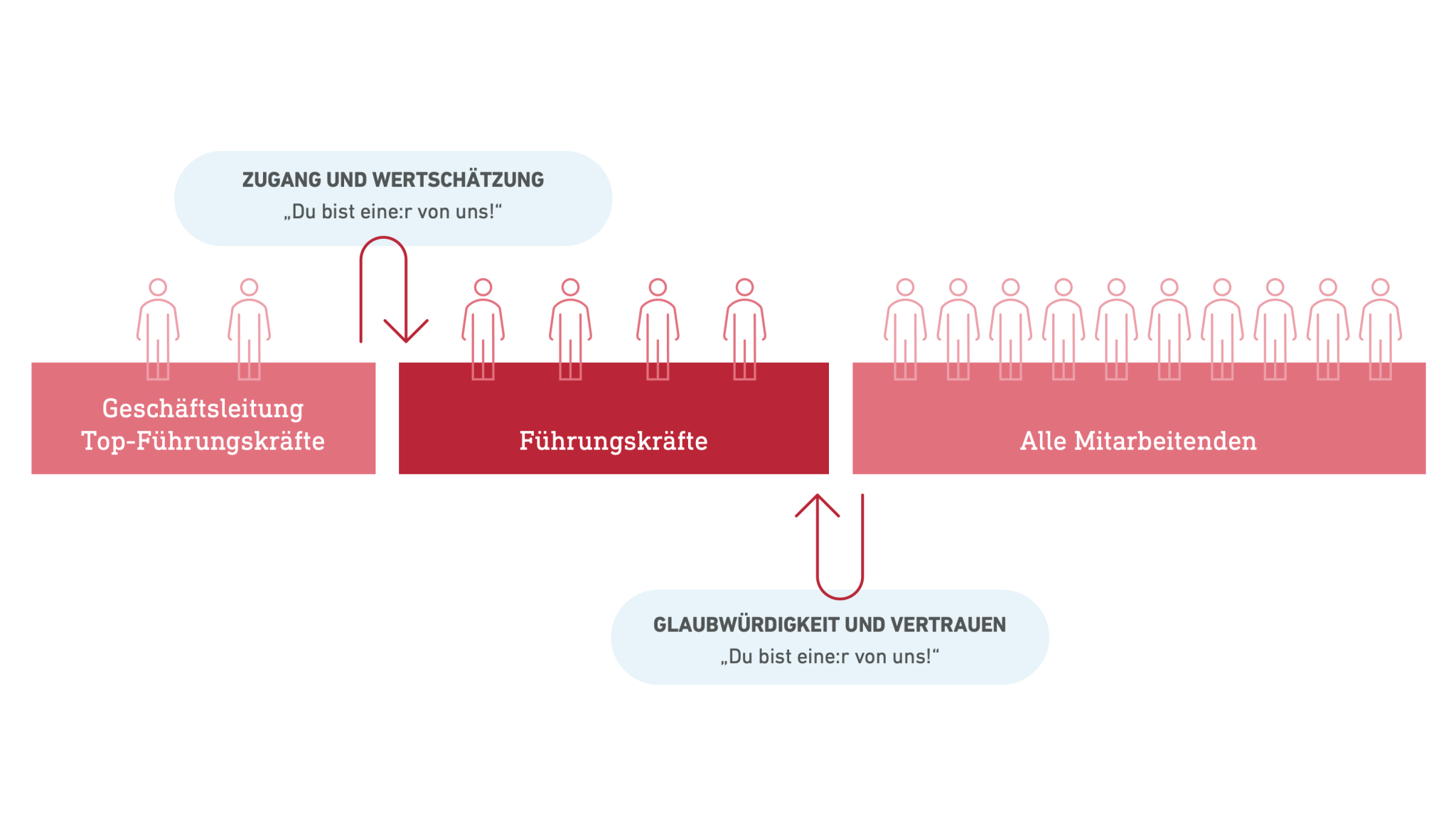
Managers stand at a critical interface within a company. They know the direction and the decisions of the organization. At the same time, they see which questions, uncertainties, and practical challenges arise within their teams.
They know both sides. They translate strategic guidelines and decisions from company leadership into the context of their teams, and they feed insights from everyday work back to the organization. Leadership communication is therefore not a one-way street. It helps the organization not only send messages but also perceive what actually arrives and where clarification is needed.
The role of managers in internal communication is the focus of PR-Werkstatt 05/2026 titled „Führungskräftekommunikation“. Sarah Otto, Georg Kolb and Sebastian Riedel explore why managers play a strategic role in internal communication and what they need to fulfill that role. Among other things, they describe five communication competencies that make a difference today.
When Strategies and Ways of Working Change
This is especially relevant when strategies, processes, or ways of working change. Employees want to understand what a decision means for their tasks. A briefing or an intranet post can provide an important foundation, but it does not replace contextualization and dialogue within the team.
Possible occasions include:
- a transformation or strategic realignment
- the communication of new processes
- a team address following a town hall meeting
- regular exchanges on goals and progress
Our Position: Don't Leave Managers on Their Own
If managers play such a central role in internal communication, handing them a message document or a presentation is not enough. First, they need clarity about the role they are expected to take on. They need concrete support on the context of a communication and on how to use the content provided. And ultimately, they need to know how to feed input from their teams back into the organization.
At Klenk & Hoursch, we do not see communication skills for managers as an isolated task. Communication has to fit into the everyday life of leadership and be supported by suitable content, exchange, and clear expectations. Internal communication, personnel development, and organizational development therefore need to bring their perspectives together and tackle leadership communication jointly.
This does not automatically mean adding more meetings to already full calendars. Many communication moments already happen: in team meetings, in regular check-ins, or right after a decision. It is not about perfect performances or memorized scripts. It is about recognizing needs within the team and using opportunities for conversation.

The training day can be expanded into a multi-phase series if needed, as in this project, which was planned in two consecutive phases. It shows how the capability building can be adapted to an organization's scope and context.
Frequently Asked Questions About the Training Day
Who is the training suitable for?
For organizations that want to strengthen managers, particularly middle management, in internal communication, strategy communication, or change communication.
Does the training work with concrete cases from the company?
Yes. The training is aligned with a specific communication task and uses realistic situations from everyday management.
Is the training day a standardized program?
No. The occasion, target group, and communication task determine the content and the exercises.
How is the transfer into daily work supported?
At the end, participants record concrete next steps. Follow-up sessions or exchange formats can be added as needed.
Strengthen leadership communication effectively?
Let's talk about your situation. Together we will determine which training format fits your occasion and your managers.
Leadership Communication Is Part of Effective Internal Communication
Managers are neither mere relays of central messages nor a substitute for internal communication. Their special role lies in connecting the company's direction with the reality of team life. For this to work, communication and organizational conditions must be considered together.
You can see how this role can be practically strengthened in a specific communication situation on our page for the Leadership Communication Training Day.